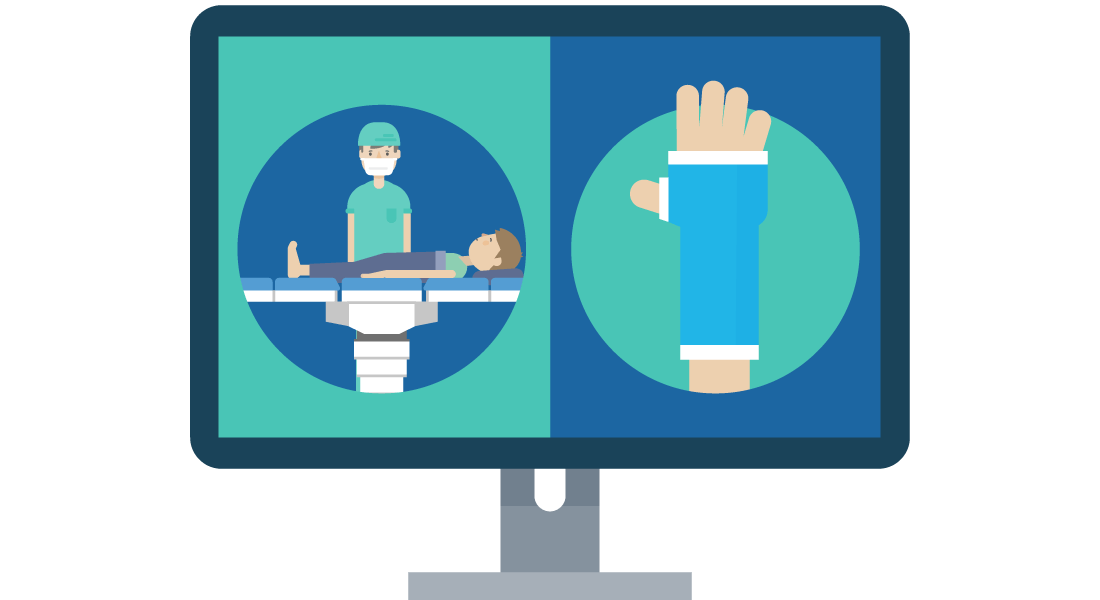
CRAFFT dissemination animation
Broken wrists are common injuries in children and the bones often move out of place.
In children under 11 years old, there are different ways to treat these injuries because their bones are still growing and can straighten as they heal.
Some doctors use a plaster cast and allow the bone to heal on its own.
Doctors know that bones in younger children will naturally grow straight even if the arm looks a little bent at first.
Other doctors use surgery to straighten the bone right away.
During surgery, the bone is straightened under anaesthetic and the doctors may use wires or a metal plate to hold it in position.
Families may worry about surgery, but want to be confident that a plaster cast with natural straightening works just as well.
To understand this better, researchers carried out the CRAFFT Study short for the Children’s Radius Acute Fracture Fixation Trial.
The study involved 750 children aged between 4 and 10 years old.
Half of the children were given a cast, allowing their broken bone to straighten naturally, whilst the other half had surgery.
The study was a randomised trial, meaning each child had an equal chance of receiving either treatment ensuring the results were fair and trustworthy.
In the year following the injury children and families were asked on regular occasions about how well they could use their arm, how much it hurt, and what they thought of the appearance of their arm.
They were also asked how much school they missed, how many hospital visits they had attended, and if there were any complications following their injury.
The results showed that children who had surgery had a very slight improvement in arm function 3 months after injury.
However, families said the benefit was hardly noticeable and generally not enough for them to feel surgery was necessary.
After 6 months arm function was the same for both groups.
Parents in both groups were initially worried about how the arm looked — either due to scars from surgery or a slight bend in the arm during recovery.
By 6 months, parents in both groups were generally happy with the appearance.
The CRAFFT Study found that for children under 11 with a broken wrist where the bone has moved out of place a cast without surgery gives the same long-term results as surgery with fewer complications and lower costs for families and the health care system.